- Monday - Saturday 08:00-18:00
- +91 97004 28610
- +91 8143621111

Why Most Home Construction Budgets Fail Without Planning
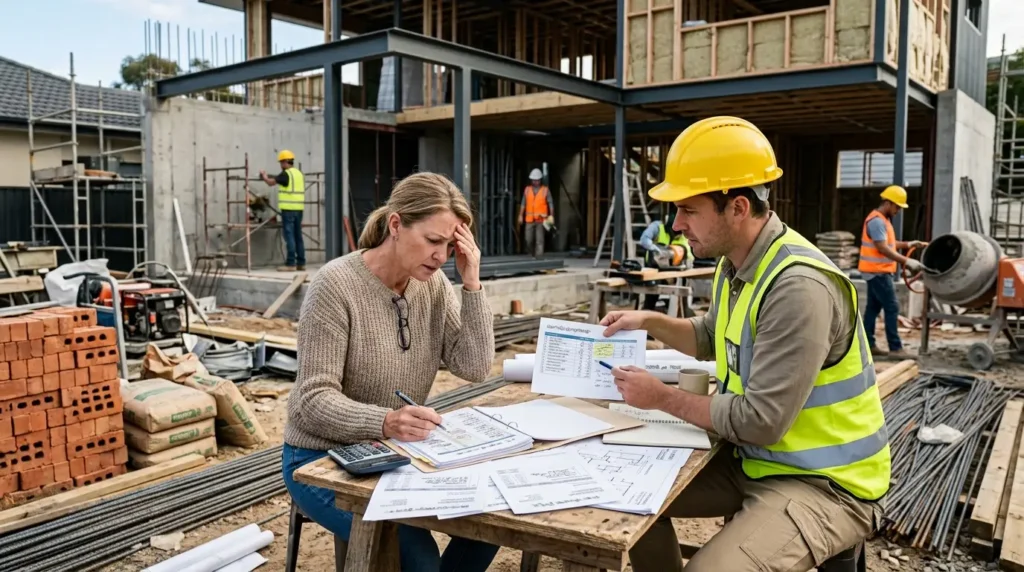
Building a house looks straightforward on paper, but in reality, most budgets fail because homeowners only calculate visible expenses. What they don’t account for are the unexpected and indirect expenses that appear at every stage. These Hidden Costs slowly increase the total project value and create financial stress if not planned properly.
A realistic construction budget is not just about estimating cement, steel, or labor. It is about understanding how decisions, delays, and site conditions directly affect overall spending. Without this clarity, even a well-planned project can go out of control.
Approval Process Involves Multiple Cost Layers
Before construction begins, several approvals are required from local authorities and consultants. Most homeowners assume this is a single expense, but it involves multiple stages of payments.
Architectural drawings, structural design approvals, legal documentation, and revision charges all add up. If there are changes in design or compliance requirements, additional costs are unavoidable.
These early expenses are often the first set of Hidden Costs that disturb the budget.
Key Cost Factors in Approval Stage
- Municipal permission and sanction fees
- Architect and structural consultant charges
- Legal verification and documentation costs
- Plan revision and re-approval charges
Site Preparation Requires More Than Basic Work
A plot cannot be used for construction without proper preparation. This stage involves several technical and physical tasks that are often underestimated.
Soil testing, excavation, leveling, and temporary site setup require both labor and equipment. If soil conditions are weak, foundation design may need modification, increasing cost further.
Ignoring this stage leads to serious financial miscalculations later.
Site Preparation Cost Elements
- Soil testing and engineering analysis
- Land leveling and excavation work
- Temporary electricity and water setup
- Site fencing and material storage arrangements
Material Pricing Is Not Stable Throughout Project
One major reason budgets fail is material price fluctuation. Cement, steel, sand, and bricks change prices based on market demand and availability.
If construction gets delayed, material prices can increase unexpectedly. Even a small rate change becomes a large difference when calculated for full project volume.
This is one of the most unpredictable Hidden Costs in construction.
Material Cost Variations
- Steel and cement price fluctuations
- Seasonal demand-based rate changes
- Transportation cost variations
- Material wastage and handling loss
Labor Productivity Directly Impacts Total Cost
Labor is not just a fixed expense. Efficiency, availability, and skill level all affect project cost and duration.
If work is slow or rework is needed, the project takes longer and costs more. Skilled labor reduces errors but increases per-day cost.
Poor labor planning leads to unnecessary budget overruns.
Labor Cost Influencing Factors
- Skilled vs unskilled labor charges
- Productivity and work efficiency
- Rework due to construction mistakes
- Labor shortage during peak seasons
Mid-Construction Design Changes Increase Expenses
Changing plans during construction is one of the fastest ways to increase cost. Even small modifications require demolition, redesign, and rework.
These changes affect structure, materials, plumbing, and electrical systems simultaneously.
Most homeowners don’t realize how expensive these decisions become in real execution.
Cost Impact of Changes
- Wall modification and reconstruction
- Electrical and plumbing rerouting
- Material wastage due to rework
- Structural adjustments and redesign
Finishing Stage Requires Heavy Investment
Finishing work looks simple but consumes a large portion of the total budget. Tiles, paint, doors, lighting, and interiors often exceed initial estimates.
This stage is where most financial surprises appear because homeowners upgrade materials at the end.
Finishing Cost Breakdown
- Flooring and tile quality upgrades
- Paint materials and multiple coats
- Electrical fittings and lighting systems
- Interior woodwork and carpentry
Utility Setup Is Often Not Included in Estimates
Electricity, water connection, drainage, and borewell installation are commonly ignored during budgeting.
These services require approvals, equipment, and installation charges that add extra cost depending on location.
Utility Installation Costs
- Electricity connection and meter charges
- Water supply and plumbing setup
- Borewell drilling and pump installation
- Drainage and sewage system work
Project Delays Increase Total Expenses
Time delays directly increase cost. Every extra day means more labor payment, supervision cost, and sometimes material storage charges.
Delays happen due to weather, approvals, or contractor inefficiency.
Delay Impact Costs
- Extended labor wages
- Equipment rental extension
- Material storage and damage risk
- Increased supervision charges
Transportation Adds Silent Extra Cost
Material transport is often not clearly included in estimates. Distance from suppliers and fuel price changes increase logistics cost.
Multiple deliveries and handling charges also add hidden expenses.
Transport-Related Costs
- Material delivery charges
- Loading and unloading labor
- Fuel price fluctuations
- Supplier coordination expenses
Conclusion
A home construction project never stays within basic estimates if Hidden Costs are ignored. These expenses appear at every stage—from approvals and materials to labor, finishing, and delays.
Smart planning is not about reducing cost, it is about anticipating these hidden factors and preparing for them in advance. Keeping a buffer budget of 15% to 25% is not optional; it is necessary.
Understanding Hidden Costs clearly is the only way to avoid financial stress and complete construction smoothly without surprises.
FAQs
They include approvals, design changes, material price variations, labor delays, finishing upgrades, and utility connections.
It is safe to keep an additional 15% to 25% buffer over your estimated construction cost.
The finishing stage usually has the highest unexpected expenses due to material upgrades and interior work.
No, but they can be controlled with proper planning, accurate estimation, and regular site monitoring.
Mainly due to material price changes, design modifications, labor inefficiency, delays, and unplanned site expenses.